Honest Guide · From the Tao Spa Team
Cupping Marks, Explained
Cupping marks are the round patches of discoloration left where a suction cup sat on the skin — the most photographed and most misunderstood part of the whole practice. They are not bruises from impact, they are not toxins surfacing, and for most people they fade within 3 to 10 days. This guide is the plain-English version our licensed therapists give in the room: what the circles are, why darker is not better, and when a mark deserves a doctor's look. Cupping at Tao Spa runs 15 minutes, usually added to a 60 minutes massage.
The timeline
How long cupping marks last
| Session style | Cup time | Typical fade | What it looks like |
|---|---|---|---|
| Light session | 3–5 min per placement | 2–3 days | Pink to light red circles |
| Typical session | 5–10 min per placement | 3–7 days | Red to plum circles |
| Strong session | 10+ min, higher suction | 7–10 days | Deep purple circles |
| Moving cupping | Cups glide over oiled skin | Hours to 1 day | Diffuse flush, no rings |
Ranges reflect what our therapists see across hundreds of sessions a year; individual skin varies with tone, age, circulation, and hydration.
I · The biology
What the circles actually are
Start with the mechanism. As the NCCIH cupping fact sheet describes, a cup is placed on the skin and negative pressure is created inside it, pulling skin and surface tissue upward. Hold that suction for 5 to 10 minutes and the tiniest blood vessels near the surface release a small amount of blood into the surrounding tissue. The flat, round patch you see afterward — red, plum, sometimes near-black — is that pooled blood, tracing the rim of the cup exactly.
So the honest one-line answer: cupping marks are suction-made discoloration, the same biology as a bruise but produced by pull instead of impact. That is also why they behave like a bruise on the way out — the color shifts from red toward purple, then brown, then yellow-green as the body reabsorbs the blood over 3 to 10 days.
II · The myth
Darker does not mean detox
The marketing version says the circles are toxins being drawn to the surface, and that darker marks prove a deeper cleanse. Neither claim survives contact with the mechanism. The color is blood from ruptured surface capillaries — its darkness tracks suction strength, cup time, and how easily your own skin marks, and nothing else. Two people can receive the identical session and walk out 3 shades apart.
This matters for safety, not just accuracy. A guest who believes darker equals better will ask for maximum suction, and a studio chasing dramatic photos will oblige — which is how you get the documented harms instead of a pleasant session. Our therapists at both Pennsylvania locations set intensity to your skin and comfort, and we say no to "make it as dark as possible" requests. The cupping therapy page for our Glenside spa covers what a well-run session feels like minute by minute.
III · Dry vs wet
One version breaks the skin
NCCIH draws the line in a single sentence: in wet cupping the skin is pierced and blood flows into the cup; dry cupping does not involve piercing the skin. For marks, that distinction is everything. Dry cupping leaves the closed-skin discoloration this guide describes. Wet cupping leaves small healing wounds along with the circles — a different recovery, a different infection risk, and a different conversation entirely.
It also changes the hygiene stakes. Equipment used in wet cupping contacts blood by design, and even dry cupping gear can pick up traces — which is why reusing unsterilized cups between guests can transmit hepatitis B and C. Tao Spa offers dry cupping only, with one sanitized cup set per guest, at both the Glenside and Spring House cupping rooms. If you are ever booking elsewhere, ask which version is on the table before anything touches your back.
IV · Marks and your doctor
Say the word "cupping" first
One practical note from the federal fact sheet is easy to skim past: the origin of cupping marks should be explained to health care providers so they are not mistaken for signs of physical abuse. A clinician who finds symmetric circular marks across someone's back with no explanation has a duty to ask hard questions. Saying "I had cupping on Tuesday" before the exam turns a difficult moment into a non-event — for you, and for anyone else the marks might be seen on, including teens and older relatives.
The same conversation is worth having in reverse before you book. Mention to your doctor that you are considering cupping if you take blood thinners, bruise or bleed easily, are pregnant, or have eczema or psoriasis — NCCIH lists skin-condition flares, persistent discoloration, and scarring among the documented side effects, and 2 minutes with your physician sorts out whether any of them apply to you. The NCCIH overview of traditional Chinese medicine is a good pre-appointment read.
V · The evidence, honestly
What the marks do and do not prove
A row of circles photographs like proof that something powerful happened. Read the research agency's own materials, though, and the caution is unmissable: the NCCIH cupping page lists no conditions the practice is proven to treat, and spends most of its length on safety. The strongest honest claim for dry cupping is the one we make — it is a distinctive, deeply relaxing form of bodywork that many guests love, delivered safely when hygiene and intensity are handled well.
"The marks prove suction happened. Everything else a session gives you — the release, the calm, the better night of sleep — you judge for yourself."
That framing is why we run cupping as a 15-minute add-on rather than a medical-sounding program: it belongs next to a great massage, not in place of a doctor. For context on how researchers weigh bodywork within pain care generally, NCCIH's chronic pain and complementary approaches review is the reference we trust most.
What cupping marks look like
The circles in daylight, honestly photographed — from fresh placement to the classic rings guests ask about.
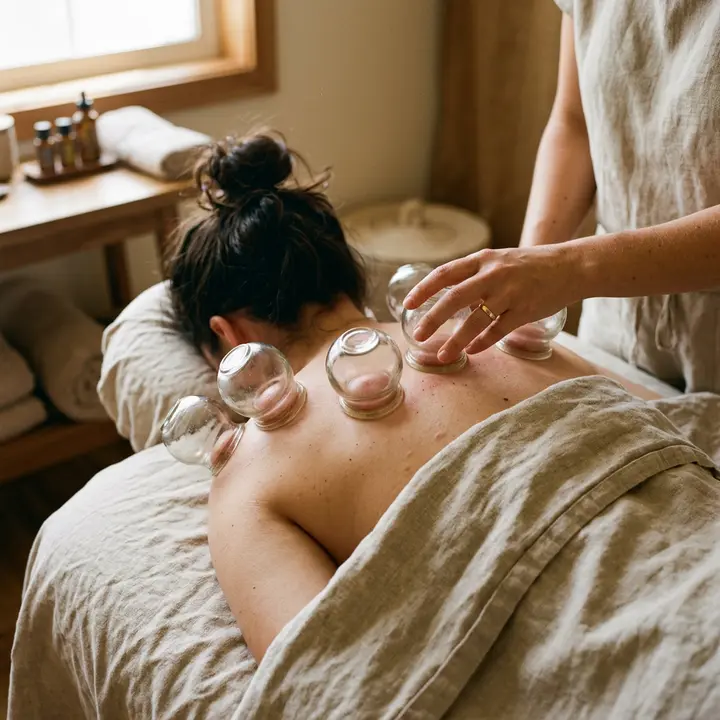
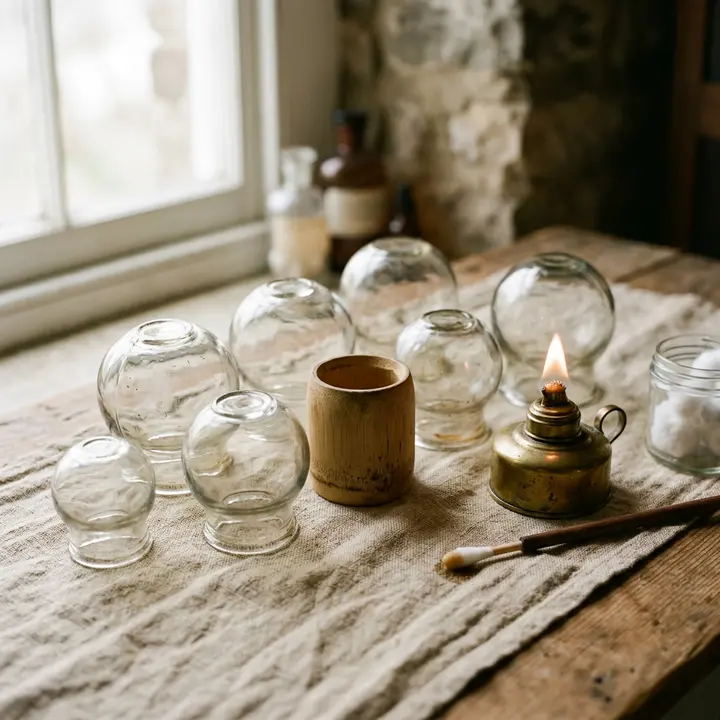
Treatment photography is illustrative of the services described.
Key facts
Where to experience cupping: Tao Spa at a glance
| Address | 106 N Keswick Ave, Glenside, PA 19038 |
|---|---|
| Phone | (215) 824-8585 |
| Hours | Mon–Sun 9:00 AM – 9:00 PM |
| Google rating | 4.7 stars from 359 reviews |
| Session lengths | 15 · 25 · 30 · 50 · 60 · 75 · 90 · 100 · 120 · 360 minutes |
| Menu size | 45 bookable services across 8 categories |
| Other location | Tao Spa Spring House — 752 N Bethlehem Pike, Spring House, PA 19477 |
| Other location hours | Mon–Sun 10:00 AM – 9:00 PM (Closed Tuesday) |
Session lengths
Cupping and related add-ons on the menu
| Service | Length | Menu section |
|---|---|---|
| Healthy Combo Massage | 60min | Tao's Specials |
| Migraine Massage + Free Guasha | 60min | Massage Pro |
| Couples Healthy Combo Massage | 60min | Couples & Four Hands |
| Scalp Hands & Feet Massage | 15min | Specialty Massage |
| Cupping | 15min | Specialty Massage |
| Gua Sha | 15min | Specialty Massage |
| Moxa Therapy | 25min | Specialty Massage |
All add-ons run 15 to 25 minutes and attach to any massage at Glenside (9 AM–9 PM daily) or Spring House (10 AM–9 PM, closed Tuesday).
Frequently Asked Questions
Are cupping marks bruises?
Not in the impact sense. A bruise comes from a blow compressing tissue; cupping marks come from suction pulling tissue upward until small surface vessels release a little blood under the skin. The biology of the discoloration is similar, but there is no trauma, no swelling in most cases, and usually no tenderness beyond the first day.
How long do cupping marks last?
Most cupping marks fade within 3 to 10 days. A light session with 5 minutes of cup time can clear in 2 to 3 days; a stronger session may take a week or slightly more. Skin tone, age, circulation, and hydration all shift the timeline a little, which is why we quote a range rather than one number.
Do darker cupping marks mean the session worked better?
No. Color mostly reflects suction strength, cup time, and your own capillary response — not effectiveness and not 'toxins leaving the body.' A skilled therapist matches intensity to your skin and comfort. Anyone chasing the darkest possible circles for a photo is optimizing the wrong thing.
Can I make cupping marks fade faster?
Gently, yes. Warm showers, light movement, and staying hydrated support normal circulation, which is what clears the pooled blood. Avoid scrubbing or massaging the circles hard in the first 48 hours. Nothing speeds the process dramatically — the honest answer is that time does most of the work.
Will I always get marks from cupping?
Usually, but not always. Very light suction or moving cupping — where oiled cups glide instead of sitting still — can leave only faint pinkness that clears within hours. Stationary cups at medium suction for 5 to 10 minutes leave the classic circles on most people. Tell your therapist what outcome you want before the first cup goes on.
Should I tell my doctor about cupping marks?
Yes, mention them at any appointment where the marks might be seen. Federal health guidance specifically advises explaining their origin so the symmetric round patches are not mistaken for signs of abuse or illness. It is a 10-second conversation that saves your clinician real confusion.
When are marks a reason to call a doctor?
If a circle blisters, opens, becomes hot and painful, or is still fully dark after 14 days, have it looked at. Persistent discoloration and skin injury are on the documented side-effect list, and eczema or psoriasis in the cupped area can flare. Those outcomes are uncommon with light, sanitary dry cupping — but they are the ones worth watching for.
Ready to Relax at Tao Spa?
Whether you're planning a self-care day, booking a massage, or exploring facial treatments, Tao Spa offers a relaxing spa experience at two convenient Pennsylvania locations.
Tao Spa
Glenside: 106 N Keswick Ave, Glenside, PA 19038
Spring House: 752 N Bethlehem Pike, Spring House, PA 19477
(215) 824-8585 Text UsPlan your visit
How do I book a massage at Tao Spa?
Book a massage at Tao Spa in 4 steps: pick Glenside or Spring House, choose a 30, 60, 90 or 120-minute session, reserve online or call (215) 824-8585, then arrive 10 minutes early. Walk-ins are welcome at both Pennsylvania locations whenever a therapist is free, and gift cards are valid at either address.
- Choose your location. Glenside is at 106 N Keswick Ave, Glenside, PA 19038, open Mon–Sun 9:00 AM – 9:00 PM. Spring House is at 752 N Bethlehem Pike, Spring House, PA 19477, open Mon–Sun 10:00 AM – 9:00 PM (Closed Tuesday).
- Pick a treatment and a session length. Massage, reflexology and facials run 30, 60, 90 or 120 minutes; couples rooms are booked in 60, 75 or 90-minute blocks. Not sure what you need? Our full service menu lists every treatment with its length.
- Reserve online, call or text (215) 824-8585. Weekend evenings and couples rooms fill first, so book 2 to 3 days ahead for those slots. Walk-ins are taken any time a therapist is open.
- Arrive 10 minutes early. A first visit starts with a short intake about pressure preference, problem areas and any health notes. Gift cards never expire and work at both locations.