Specialty Service · Glenside, PA
Gua Sha in Glenside, PA
Gua Sha is one of the oldest forms of bodywork still practiced today — a smooth ridged tool, a little oil, and short repeated strokes along the skin. We offer it two ways at Tao Spa Glenside: a body version for shoulder and upper-back tightness, and a face version for jaw, brow, and around the temples. Both are 15-minute sessions and pair naturally with a 30 minutes or 60 minutes massage; we are open 9 AM to 9 PM daily for walk-ins. Delivered by our licensed, professionally trained therapists, both can stand alone or pair onto a longer service, and both belong firmly in the spa category — not the clinic.
At a glance
The session in five numbers
| Detail | Number | Note |
|---|---|---|
| Session length | 15 min | Add-on or standalone |
| Tool | Smooth jade / bian stone | Sanitized between sessions |
| Body marks | 2–5 days fade | Face version leaves none |
| Best paired with | Hydration Facial | or 60-min Migraine Massage |
| Pressure | Light → firm | Face is always light |
I · What it is
Gua Sha in plain English
The name literally translates as "scrape" + "sha" — the temporary redness that appears on the skin when the practice is done firmly. It has been part of traditional Chinese medicine for centuries, sitting alongside acupuncture, tui na, and cupping as part of a broader family of hands-on practices.
In a modern spa setting two versions show up. Body Gua Sha uses firmer pressure with a smooth jade or bian-stone tool, usually along the upper back, shoulders, and neck. It feels like a steady, deep scrape — surprisingly satisfying on knots that have been sitting for weeks. Face Gua Sha is the opposite: light, slow, ridged-edge strokes across the jaw, cheek, brow, and around the temples. Same tradition, very different sensation.
We do not do the "wet" skin-pricking version or anything that crosses into medical territory. What you get at Tao Spa is the calm, traditional, fully spa-grade version — performed by skilled, cross-trained therapists who have studied the technique in the broader Chinese bodywork lineage.
II · Face Gua Sha
The slow, hot-towel version
Face Gua Sha is the version that has gone viral on social media in the last few years — usually with a flat heart-shaped jade tool and a serum. The real thing is a little quieter than the trend. A hot towel goes on first. Then a hydrating serum or oil. Then slow ridged-edge strokes following the line of the jaw upward, along the cheekbone outward, across the brow, and around the temples. Each pass takes only a few seconds.
What it actually does is twofold. First, mechanical — it warms the skin and helps lymphatic flow, which is part of why faces sometimes look a little less puffy afterwards. Second, neurological — the slow, repeated pressure releases the small muscles around the jaw and brow that most of us hold tight without realising. The American Massage Therapy Association (AMTA) notes that gentle hands-on bodywork can be a supportive part of a calm wellness routine; it does not replace skincare or medical treatment.
"The slow, repeated pressure releases the small muscles around the jaw and brow that most of us hold tight without realising."
We include a Face Gua Sha pass in our 60-minute Migraine Massage for exactly this reason — the head, neck, and face usually need to be worked together to settle.
III · Body Gua Sha
For the shoulders that won't drop
The body version of this practice is what we reach for when standard deep tissue work is not quite getting through. The therapist warms the skin with oil, then makes short, firm scraping strokes along the muscle, usually on the upper traps, between the shoulder blades, and down the sides of the neck. It feels intense in a satisfying way — like the muscle is finally letting go of something it has been holding for too long.
The marks (sha) that sometimes appear are pink to red and fade within 2 to 5 days. They are not bruises. We mention them because some clients book before a beach trip or wedding and want to know — easy fix, just place the work where clothing covers, or skip the firm version and book the face technique or our cupping session in a covered area instead.
IV · Safe, simple, honest scope
What it is and isn't
What we offer at Tao Spa is a relaxation practice in the broader tradition of Chinese bodywork. It is not a medical procedure, and it does not claim to cure or treat any medical condition. NCCIH on acupuncture's effectiveness and safety — Gua Sha's nearest TCM cousin in the Western evidence base — takes a similarly measured position: some traditional practices have meaningful evidence for everyday symptoms and relaxation, while broader medical claims should be checked with a clinician. That is the same line we hold.
Please check with your doctor first if you are on blood thinners, have a bleeding or skin condition, are pregnant, or are recovering from a recent injection or procedure. If you are cleared, we are happy to book.
Find Us in Glenside
106 N Keswick Ave, on Keswick Avenue in downtown Glenside. Short walk from the SEPTA station, near the Keswick Theatre. Easy reach from Jenkintown, Wyncote, Cheltenham, Abington, and Elkins Park.
What gua sha actually involves
A smooth-edged stone drawn along oiled skin. On the body it raises temporary marks; on the face it does not.
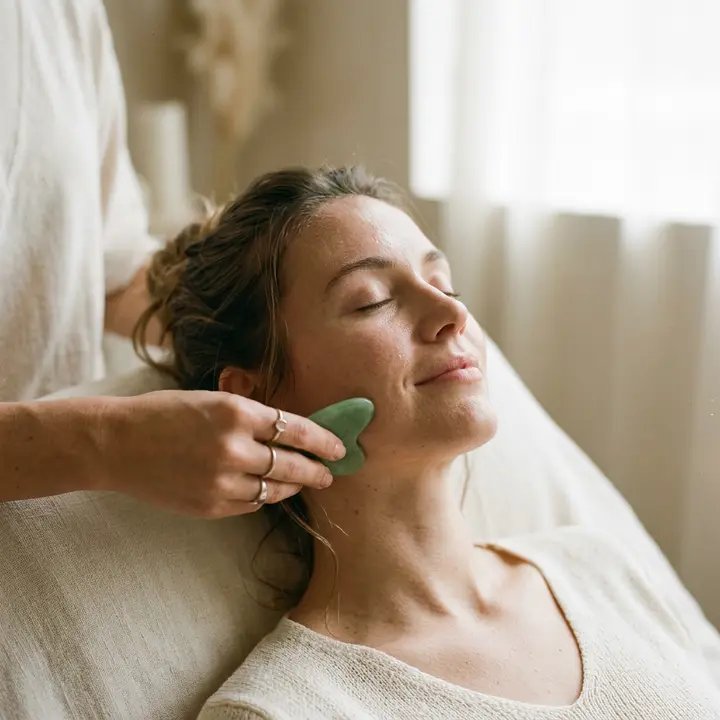
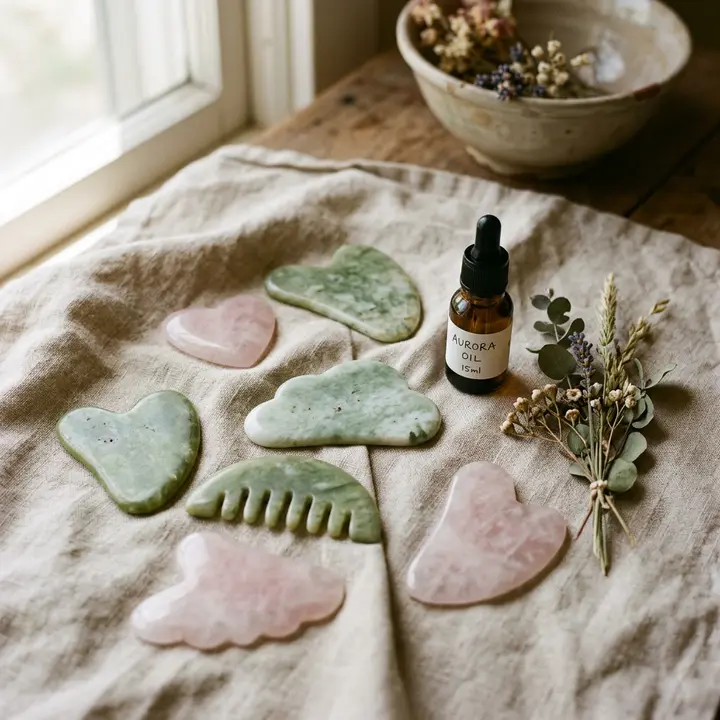
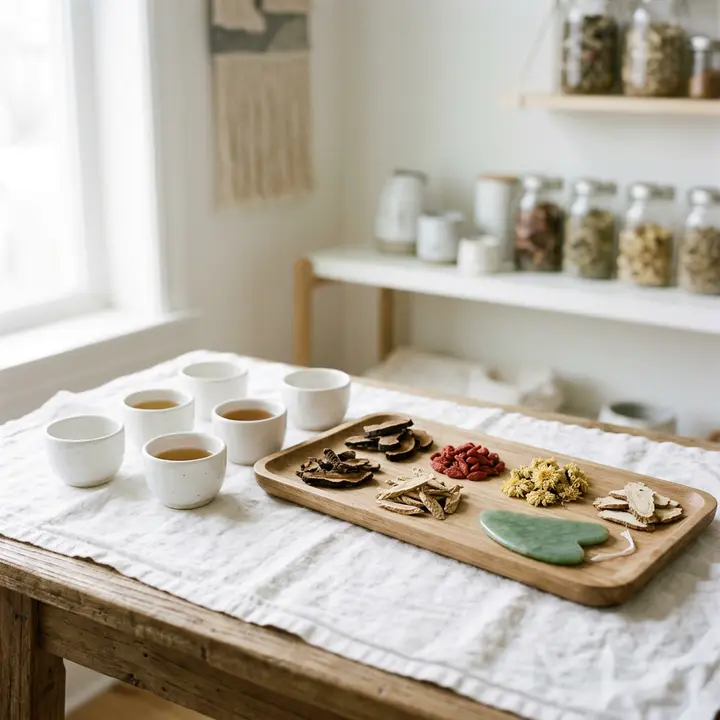
Treatment photography is illustrative of the services described.
Key facts
Tao Spa Glenside at a glance
| Address | 106 N Keswick Ave, Glenside, PA 19038 |
|---|---|
| Phone | (215) 824-8585 |
| Hours | Mon–Sun 9:00 AM – 9:00 PM |
| Google rating | 4.7 stars from 359 reviews |
| Session lengths | 15 · 25 · 30 · 50 · 60 · 75 · 90 · 100 · 120 · 360 minutes |
| Menu size | 45 bookable services across 8 categories |
| Other location | Tao Spa Spring House — 752 N Bethlehem Pike, Spring House, PA 19477 |
| Other location hours | Mon–Sun 10:00 AM – 9:00 PM (Closed Tuesday) |
Session lengths
Gua sha and the sessions it pairs with
| Service | Length | Menu section |
|---|---|---|
| Healthy Combo Massage | 60min | Tao's Specials |
| Massage and Facial | 100min | Tao's Specials |
| Migraine Massage + Free Guasha | 60min | Massage Pro |
| Couples Healthy Combo Massage | 60min | Couples & Four Hands |
| Cupping | 15min | Specialty Massage |
| Gua Sha | 15min | Specialty Massage |
| Hydration Facial | 60min | Facial Services |
| Gentlemen's Facial | 60min | Facial Services |
Body gua sha marks fade in 2 to 5 days; the facial version leaves none.
Frequently Asked Questions
What exactly is Gua Sha?
Gua Sha is a traditional East Asian bodywork practice where a smooth-edged tool is used to make short, repeated strokes along the skin. At Tao Spa Glenside we offer both the body and face versions as 15-minute add-on sessions — they sit alongside our 30 minutes and 60 minutes massage and reflexology bookings. The technique has been part of Chinese folk medicine for centuries. In modern wellness contexts you will see two flavours — the body version (often on the back and shoulders) and the face version (gentle ridged strokes along the jaw, cheek, and brow).
Does it hurt?
The body version can feel intense — a firm, scraping sensation along tight muscle. The face version is the opposite: light, slow, and meditative. Both are adjustable; tell your therapist what you prefer and they will dial pressure to comfort.
Does Gua Sha leave marks?
The firmer body version on the back or shoulders can leave temporary pink or reddish marks called sha. They fade in 2–5 days and are not bruises in the impact sense. The face version does not leave visible marks at all — we use light pressure and a hydrating serum.
Is face Gua Sha actually good for skin?
There is real evidence that gentle massage improves circulation, helps lymphatic flow, and softens jaw tension. The American Academy of Dermatology notes that facial massage can support skin appearance when done gently — it does not replace skincare or treatment for medical skin conditions. Think of it as a relaxing add-on, not a clinical procedure.
Can I book Gua Sha on its own?
Yes. The body version is a 15-minute specialty add-on. The face version is also a 15-minute service that includes a hot towel and ridged-edge work for jaw and brow tension. Both can also be stacked onto a full massage or facial.
How often is reasonable to book it?
For the body version during a tight stretch, once every 2 weeks is plenty. For the face technique as part of a calm-skin routine, once a week is fine — but most people book it monthly as a treat. We will never push frequency on you.
Who should ask their doctor first?
Please check with your physician if you are on blood thinners, have a bleeding disorder, are pregnant, have a skin condition in the treatment area, or are recovering from a recent injection or facial procedure. We would rather you skip a session than push through.
Ready to Relax at Tao Spa?
Whether you're planning a self-care day, booking a massage, or exploring facial treatments, Tao Spa offers a relaxing spa experience at two convenient Pennsylvania locations.
Tao Spa
Glenside: 106 N Keswick Ave, Glenside, PA 19038
Spring House: 752 N Bethlehem Pike, Spring House, PA 19477
(215) 824-8585 Text UsPlan your visit
How do I book a massage at Tao Spa?
Book a massage at Tao Spa in 4 steps: pick Glenside or Spring House, choose a 30, 60, 90 or 120-minute session, reserve online or call (215) 824-8585, then arrive 10 minutes early. Walk-ins are welcome at both Pennsylvania locations whenever a therapist is free, and gift cards are valid at either address.
- Choose your location. Glenside is at 106 N Keswick Ave, Glenside, PA 19038, open Mon–Sun 9:00 AM – 9:00 PM. Spring House is at 752 N Bethlehem Pike, Spring House, PA 19477, open Mon–Sun 10:00 AM – 9:00 PM (Closed Tuesday).
- Pick a treatment and a session length. Massage, reflexology and facials run 30, 60, 90 or 120 minutes; couples rooms are booked in 60, 75 or 90-minute blocks. Not sure what you need? Our full service menu lists every treatment with its length.
- Reserve online, call or text (215) 824-8585. Weekend evenings and couples rooms fill first, so book 2 to 3 days ahead for those slots. Walk-ins are taken any time a therapist is open.
- Arrive 10 minutes early. A first visit starts with a short intake about pressure preference, problem areas and any health notes. Gift cards never expire and work at both locations.