Bodywork Guide · The Scraping Stone
Body Gua Sha: What It Does, Why It Leaves Marks and How It Compares With Cupping
Body gua sha is the firm-pressure version of a practice most people now know from the face: a smooth-edged stone, a little oil, and short repeated strokes along the upper back, shoulders and neck. It leaves a speckled red flush that looks alarming in photos and feels, by most accounts, like a tight muscle finally being reached. Here's what the stroke does, why it marks, how it compares with cupping, and how the 15 minutes run at Tao Spa.
In one paragraph
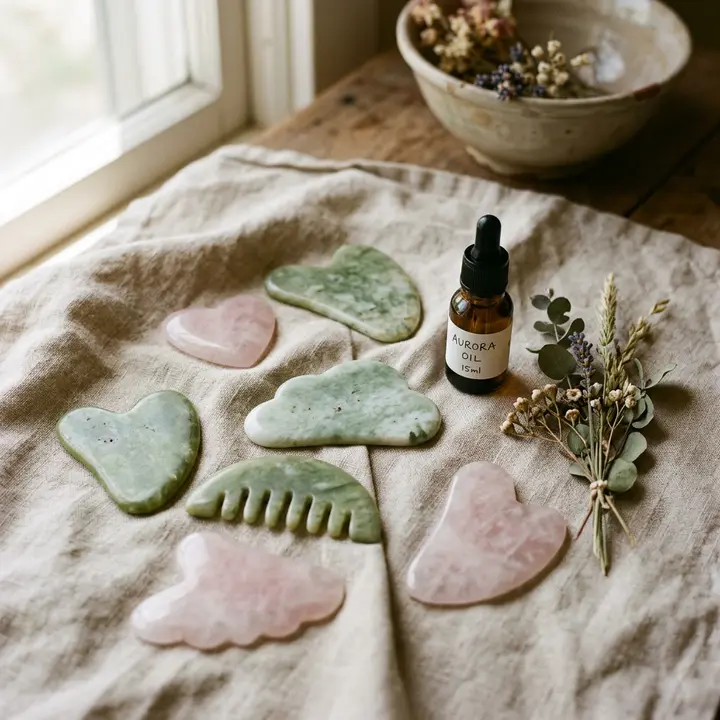
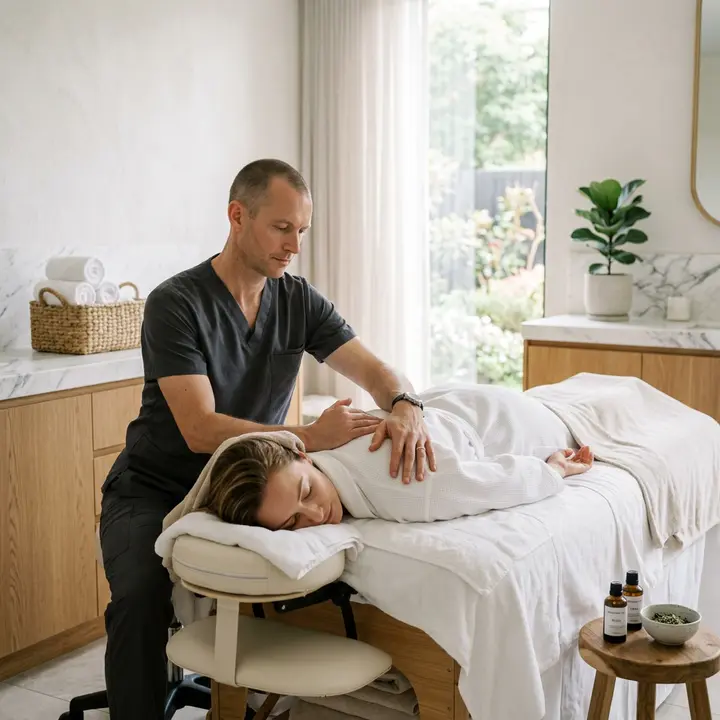
Body gua sha is a bodywork technique in which a therapist draws a smooth-edged jade or bian stone tool along oiled skin in short, firm strokes, usually over the upper back, shoulders and neck. At Tao Spa it's a 15-minute add-on on both menus; the firmer strokes can leave red speckled marks called sha that typically fade in 2 to 5 days, and the face version leaves none.
15-minute add-on · jade or bian stone tool · marks fade in 2–5 days · both locations
By the numbers
Body Gua Sha at a glance
| Detail | Number | Note |
|---|---|---|
| Session length | 15 minutes | Gua Sha, Specialty Massage section of both menus; add-on or on its own |
| Tool | Jade or bian stone | Smooth-edged, drawn over oiled skin; sanitized between sessions |
| Marks | 2–5 days | Typical fade window for the red speckling after firm body strokes |
| Face version | 15 minutes | Face Gusha on the Glenside menu, with hot towel; leaves no marks |
| Glenside hours | Mon–Sun 9:00 AM – 9:00 PM | 106 N Keswick Ave, Glenside; Spring House is closed on Tuesdays |
| Google rating | 4.7 stars | 277 reviews on the Glenside profile |
I · The definition
What is gua sha, and what makes it body gua sha?
Body gua sha is a traditional East Asian bodywork technique in which a smooth-edged tool, usually jade or bian stone, is pressed against oiled skin and drawn along the muscle in short, repeated strokes. The name translates as scraping sha, sha being the red speckling the strokes raise. On the body it's firm work for the upper back, shoulders and neck; the gentle facial version is a different session.
Gua sha comes out of the tradition the NCCIH describes in its overview of traditional Chinese medicine, the one that also produced acupuncture, cupping and tai chi, and it reaches Western spas as a relaxation technique, not a medical one. The edge matters more than the material; ours are jade or bian stone, sanitized between sessions.
Why body before face? Because the body version is the original and the facial version the adaptation. Strokes that raise sha on a trapezius are far too much for a cheek, so the face technique drops the pressure to almost nothing. Glenside carries both as 15-minute lines, Gua Sha and Face Gusha, and Spring House the body add-on; the Glenside gua sha page is where both are booked.
II · The mechanism
What does gua sha do?
Gua sha presses and drags at once. The edge of the tool sinks into the muscle under steady pressure, then travels along it, so each stroke works a strip of tissue the way a thumb would but with a harder, narrower edge that doesn't tire. Repeated over the same lines, the strokes warm the area, bring blood to the surface and, for most guests, leave the muscle looser.
The sensation is the thing to prepare for. Body gua sha feels like a firm, slightly rough scrape, satisfying on a muscle that's been braced for weeks; the first pass is the strongest and each one after it is easier as the tissue warms. It isn't a treatment: the evidence for hands-on bodywork, summarized by the NCCIH's page on massage therapy, supports short-term relaxation and relief from muscle tension, and that's the claim we make for gua sha too.
The guests who ask for the body add-on are usually carrying the same thing: a neck and upper back that have set hard after days of screen work, or a knot between the shoulder blades that hands keep sliding over. The edge of a stone reaches those places differently from a thumb.
What are the gua sha benefits people actually notice?
Three, none of them medical: a tight upper back that feels reached rather than skimmed, warmth across the area for an hour or so afterwards, and often an easier time turning the head the next morning. Those are the gua sha massage benefits to expect. The NCCIH's practical notes on massage say effects of this kind are short-lived and that bodywork is part of looking after yourself, not a fix.
The stone doesn't do anything a thumb can't; it does it with an edge that reaches the muscle a thumb slides over.
III · Marks
Gua sha bruising: does body gua sha bruise or hurt?
Body gua sha shouldn't hurt, and the marks it leaves aren't bruises in the usual sense. The red speckling, called sha, appears where the strokes have drawn blood into the tiny capillaries just under the skin until some of it leaks out; nothing has been struck, and there's no swelling or lasting tenderness for most people. It looks worse than it feels, and it fades on its own within days.
What therapists see is a pattern that tracks the strokes: a flush within the first few passes, deepening to red or dusky speckling along the lines the tool followed, usually gone in 2 to 5 days and sooner after light work. That's observation, not trial evidence. What the NCCIH does say about hands-on bodywork is to tell the practitioner about any discomfort and expect them to adjust, which is how the pressure is managed here.
Pain during the session is the signal to speak up. A stroke that stings rather than scrapes means the pressure is too high or the oil has run thin. Next-day tenderness should be mild; anything hot, swollen or blistered isn't sha and deserves a call to us and then your doctor. Cupping circles are a different mark with a longer fade; our guide to cupping marks covers them.
IV · Fade times
How long do gua sha marks last?
Most gua sha marks last 2 to 5 days. A light session leaves a pink flush that can be gone by the next morning; a typical firm session leaves red speckling that fades over 2 to 3 days; the strongest strokes on a very tight area can leave darker, denser speckling that takes closer to 5. Skin tone, circulation and how much pressure you asked for all shift the timing.
Booking before an event where your back or neck will show? Say so at intake. The therapist can keep the strokes light, trading some intensity for a flush that's gone by morning, work only where a collar or strap will cover, or switch you to the face version, which leaves nothing.
| Stroke intensity | What the skin shows | Where you'd see it | Typical fade |
|---|---|---|---|
| Light strokes | An even pink flush, no distinct speckles | Face work, or a first body session at low pressure | Hours to 1 day |
| Typical firm strokes | Red speckling in streaks along the stroke lines | Upper traps and the sides of the neck | 2 to 3 days |
| Strong strokes on a tight area | Dense red to dusky-purple speckling, sometimes a solid band | Between the shoulder blades, over a long-standing knot | 3 to 5 days |
Windows are what our therapists see on most guests, not a clinical figure. Darker marks mean more pressure or a tighter area, not a better session.
V · Choosing
Cupping vs gua sha: which should you pick?
Pick gua sha if you want firm pressure and a scraping stroke that reaches into a specific knot; pick cupping if firm pressure is the thing you dislike and you'd rather feel tissue lifted than pressed. Both are 15-minute add-ons on both menus, both leave temporary marks, and both are usually attached to a 60-minute massage. The marks differ: streaks for gua sha, circles for cupping.
The fuller comparison is in our guide to cupping therapy, which covers the suction, cup times and safety; the NCCIH cupping page holds cupping's safety notes. The short version: if you've ever asked a therapist to go harder on one spot, gua sha; if you've ever asked them to ease off, cupping.
| Body gua sha | Dry cupping | |
|---|---|---|
| Tool | Smooth-edged jade or bian stone | Glass or silicone suction cups |
| Direction of force | Presses in and drags along the muscle | Pulls tissue up into the cup |
| Sensation | Firm, rough scrape; intense on tight spots | Steady pull; little pressure |
| Marks | Red speckled streaks along the stroke | Round marks the size of the cup rim |
| Typical fade | 2 to 5 days | 3 to 10 days |
| Add-on length | 15 minutes, both menus | 15 minutes, both menus |
| Pick it when | You want depth and a specific knot reached | You find pressure uncomfortable or want a broad area worked |
Some guests book both on the same massage: cupping over the broad tight area, gua sha along the knots the cups don't fit.
VI · Face vs body
Face gua sha vs body gua sha: what's the difference?
The tool is the same kind of smooth stone; everything else is different. Face gua sha uses feather-light strokes over serum or oil along the jaw, cheekbones, brow and temples, leaves no marks and is mostly about a few quiet minutes of calm. Body gua sha uses firm strokes over oiled muscle on the back, shoulders and neck, raises sha, and is about releasing a tight area.
On our menus they're separate lines. At Glenside, Gua Sha is the 15-minute body add-on and Face Gusha a 15-minute facial session that opens with a hot towel. Both locations also fold a facial gua sha pass into their 60-minute migraine sessions, the Migraine Massage + Free Guasha at Glenside and the Migraine Massage + Facial GuaSha at Spring House. Spring House has no separate face line.
If the viral version brought you here, the trend isn't wrong so much as narrow: one gentle application of a practice built for the back. Book Face Gusha for the quiet, markless version, the body add-on if a tight upper back is the real problem, and the Glenside facials for a longer skin-care session.
VII · The 15 minutes
How does a 15-minute body gua sha add-on run at Tao Spa?
The add-on follows the same sequence at both locations and almost always comes at the end of a massage, when the muscle is already warm. Booked alone it's the same 15 minutes with a short warm-up; either way, arrive 10 minutes early on a first visit.
From the intake question to the last stroke, the add-on runs like this:
- Intake. The therapist asks about blood thinners, skin conditions, sunburn or broken skin where the strokes would go, pregnancy, and whether to keep the marks light.
- Oil. Massage oil goes on the upper back, shoulders and neck so the stone glides rather than drags; this step is never skipped.
- Test stroke. A few light passes so you feel the edge before the pressure comes up; say more or less and it changes immediately.
- The work. Short strokes in one direction along the upper traps, between the shoulder blades and down the sides of the neck, each line worked until the flush rises.
- Finish. The oil is wiped down and the area covered to keep it warm; the stone goes off to be sanitized before it's used again.
Does the add-on replace part of the massage?
No. It adds 15 minutes to the appointment: a 60-minute Therapeutic Massage with gua sha is a 75-minute booking, and a 90-minute Deep Tissue Massage with gua sha is 105. Mention it when you book so the time is held; walk-ins are welcome whenever a therapist is free.
VIII · Suitability
Who should skip body gua sha, or ask a doctor first?
Skip it, or ask your doctor first, if you take blood thinners or have a bleeding disorder, because the strokes deliberately bring blood to the surface; if you're pregnant; if the skin over the area is sunburned, broken, or in an eczema or psoriasis flare; or if you've had a recent injection, surgery or procedure nearby. A gentler session is always available instead.
- Blood thinners or a bleeding disorder: sha is blood under the skin, and medication that slows clotting can turn light speckling darker.
- Pregnancy: firm work on the back and neck is a doctor's call; the 60-minute Prenatal Massage is the booking meanwhile.
- Sunburn, broken skin, a rash, or an eczema or psoriasis flare over the area: the stone shouldn't travel over damaged skin.
- Recent surgery, an injection or a procedure near the area, or easy bruising: wait until it's healed and cleared.
- A neck or back that hurts rather than feels tight, or pain with numbness or tingling: a doctor first, not a stone.
What should you book instead?
None of this is a reason to avoid the spa; it's a reason to pick a different line. The NCCIH's massage overview lists the situations where hands-on bodywork calls for medical advice first, and intake asks about each of them. If you're cleared or unsure, the 60-minute Therapeutic Massage is the gentle default, and the face version is the lighter way to try the stone.
Session lengths at Tao Spa Glenside
Gua sha and the sessions it attaches to at Tao Spa Glenside
| Service | Length | Menu section |
|---|---|---|
| Asian Power Massage | 60min | Massage Pro |
| Migraine Massage + Free Guasha | 60min | Massage Pro |
| Deep Tissue Massage | 30min | Massage Bodywork |
| Therapeutic Massage | 60min | Massage Bodywork |
| Cupping | 15min | Specialty Massage |
| Gua Sha | 15min | Specialty Massage |
| Face Gusha | 15min | Specialty Massage |
The add-on reserves 15 extra minutes on top of the massage. Spring House carries the same Gua Sha and Cupping lines and is closed on Tuesdays.
Key facts
Where to book: Tao Spa Glenside at a glance
| Address | 106 N Keswick Ave, Glenside, PA 19038 |
|---|---|
| Phone | (215) 824-8585 |
| Hours | Mon–Sun 9:00 AM – 9:00 PM |
| Google rating | 4.7 stars from 277 reviews |
| Session lengths | 15 · 25 · 30 · 50 · 60 · 75 · 90 · 100 · 120 · 360 minutes |
| Menu size | 45 bookable services across 8 categories |
| Other location | Tao Spa Spring House — 752 N Bethlehem Pike, Spring House, PA 19477 |
| Other location hours | Mon–Sun 10:00 AM – 9:00 PM (Closed Tuesday) |
The stone, the oil and the face version
What the add-on looks like in the room: the tool, the oil that goes on before the first stroke, and the gentle facial pass most people have seen online.
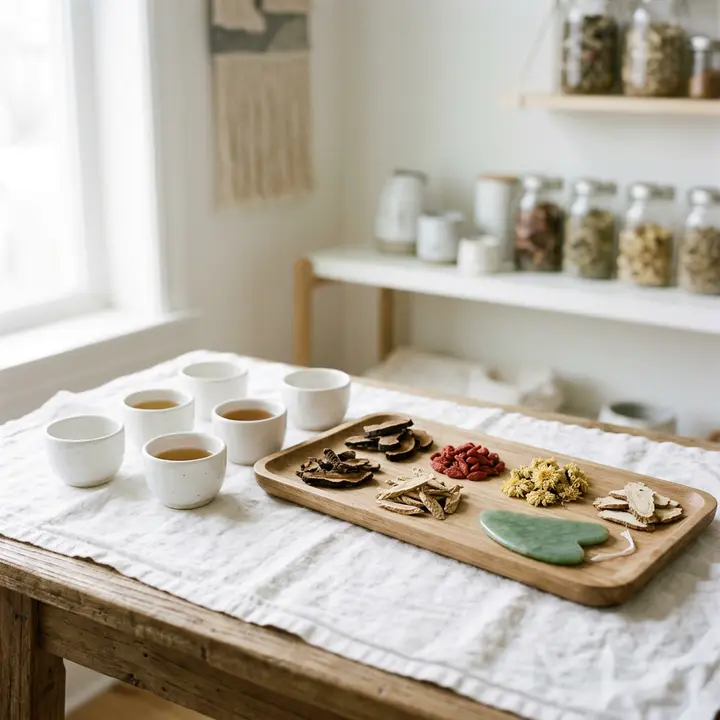
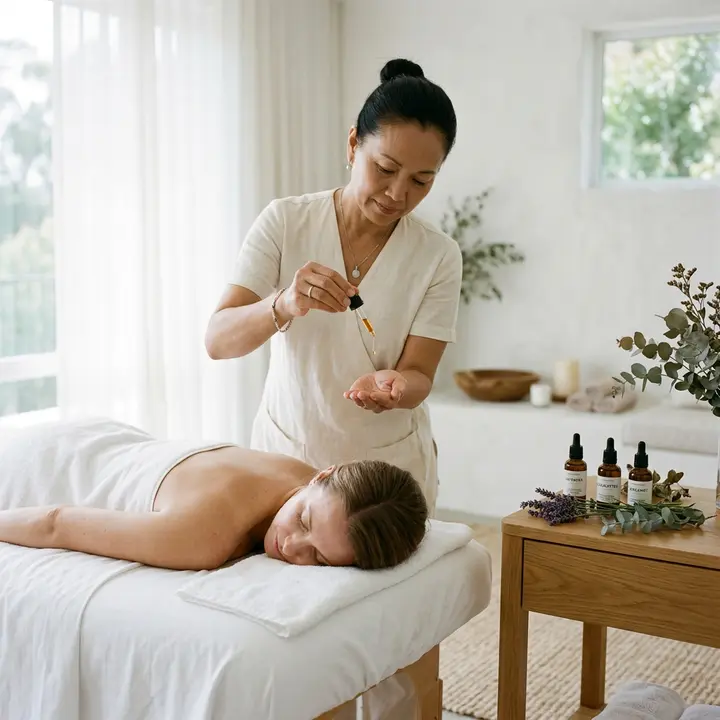
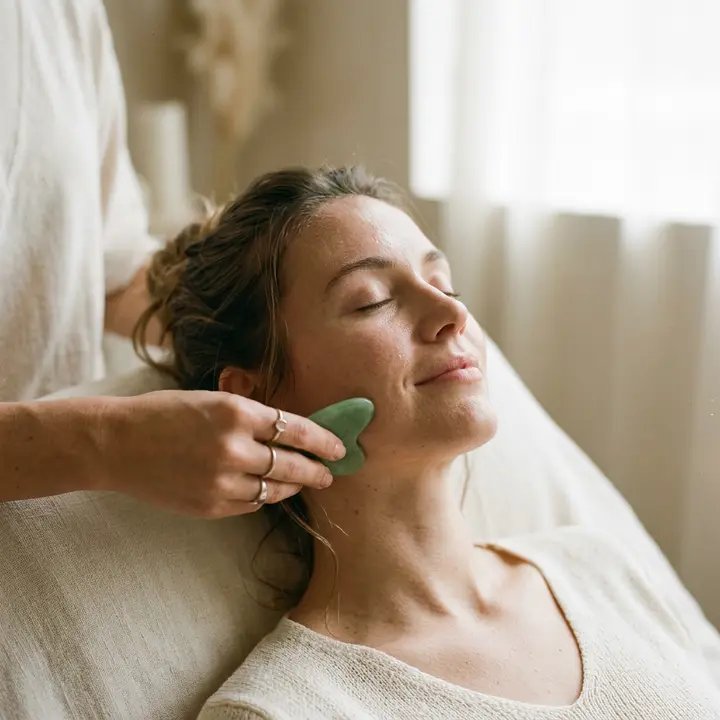
Treatment photography is illustrative of the services described.
Frequently Asked Questions
Can you do gua sha on yourself at home?
On the face, yes, with light pressure and a clean tool. The body version is hard to do well on yourself: the places that need it, the upper traps and between the shoulder blades, are the ones you can't reach or see, and the pressure that makes it worthwhile is easy to overdo. If you try, keep it light and use oil.
How often should you get body gua sha?
Wait for the marks to clear completely, then go by how the area feels. For most guests that lands at every 2 to 4 weeks, attached to the massage they already book; a stressful month sometimes shortens the gap to 2 weeks. Repeating firm strokes over skin that's still speckled from last time adds color, not benefit.
Does gua sha help with neck pain?
People book it for a stiff neck and often say it turns more easily afterwards. The research on hands-on bodywork, summarized by the NCCIH, supports short-term relief from muscle tension rather than any effect on a diagnosed condition, and gua sha itself hasn't been well studied. Neck pain that persists, or comes with numbness or tingling, is for your doctor first.
Can I add gua sha to any massage?
Yes, to any table massage on either menu, from the 30-minute Deep Tissue to the 120-minute Deep Relaxation. It attaches at the end, when the muscle is warm and the therapist knows which spots stayed tight, and adds 15 minutes to the appointment. The 60-minute Migraine Massage at Glenside already includes a facial gua sha pass; the body strokes are added as usual.
What should you do after body gua sha?
Keep the area covered and warm for the rest of the day, drink some water, and leave the hard workout and the back scrub until tomorrow. Don't rub the marks or ice them; they aren't an injury and need nothing done to them. The speckling fades over the next 2 to 5 days, and the stiffness usually eases before the color does.
Does gua sha remove toxins?
No. The speckling is blood from tiny surface capillaries, not toxins, and the body clears it as it clears any small mark. Darker sha means firmer pressure or a tighter area, not more of anything leaving. The reasons to book it are the feel of a muscle being reached and a looser upper back, not a cleanse.
Is gua sha the same as a deep tissue massage?
No, though both are firm. Deep tissue uses thumbs, elbows and forearms to press into the muscle in slow strokes over 30 or 90 minutes; gua sha draws a hard-edged stone along the muscle for 15 minutes and raises marks where deep tissue usually doesn't. They combine well: the massage works the whole back, the stone finishes the stubborn spots.
Can I get gua sha and cupping in the same visit?
Yes. They're separate 15-minute add-ons, so the two together reserve 30 extra minutes on top of the massage. The order is the therapist's call on the day, and if the skin is well marked after one, they'll keep the other light. Book both ahead, and expect streaks and circles that fade on different clocks: 2 to 5 days for gua sha, 3 to 10 for cupping.
Sources and further reading
What we read before writing this guide
- NCCIH: Traditional Chinese Medicine — What You Need To Know
- NCCIH: Massage Therapy — What You Need To Know
- NCCIH: 6 Things To Know About Massage Therapy for Health Purposes
- NCCIH: Cupping
Tao Spa is a relaxation and wellness spa, not a medical provider. Our sessions support relaxation and general well-being; they do not diagnose, treat or cure any condition. Talk with your doctor about persistent pain, swelling or skin changes, and tell us about any health condition before your session.
Ready to Relax at Tao Spa Glenside?
Book your visit to Tao Spa Glenside at 106 N Keswick Ave, Glenside, PA. Choose a service online, or call or text for help with your appointment.
Tao Spa
Glenside: 106 N Keswick Ave, Glenside, PA 19038
Spring House: 752 N Bethlehem Pike, Spring House, PA 19477
(215) 824-8585 Text UsMore massage guides
Plan your visit
How do I book a massage at Tao Spa?
Book a massage at Tao Spa in 4 steps: pick Glenside or Spring House, choose a 30, 60, 90 or 120-minute session, reserve online or call (215) 824-8585, then arrive 10 minutes early. Walk-ins are welcome at both Pennsylvania locations whenever a therapist is free, and gift cards are valid at either address.
- Choose your location. Glenside is at 106 N Keswick Ave, Glenside, PA 19038, open Mon–Sun 9:00 AM – 9:00 PM. Spring House is at 752 N Bethlehem Pike, Spring House, PA 19477, open Mon–Sun 10:00 AM – 9:00 PM (Closed Tuesday).
- Pick a treatment and a session length. Massage, reflexology and facials run 30, 60, 90 or 120 minutes; couples rooms are booked in 60, 75 or 90-minute blocks. Not sure what you need? Our full service menu lists every treatment with its length.
- Reserve online, call or text (215) 824-8585. Weekend evenings and couples rooms fill first, so book 2 to 3 days ahead for those slots. Walk-ins are taken any time a therapist is open.
- Arrive 10 minutes early. A first visit starts with a short intake about pressure preference, problem areas and any health notes. Gift cards never expire and work at both locations.