Massage Guide · Choosing Your Pressure
Deep Tissue vs Swedish Massage: How to Pick the Right One
Deep tissue vs Swedish massage is the choice almost everyone makes at the front desk, and most people make it on the wrong basis: how tough they think they are. The better question is what you want the hour to do. This guide sets the two styles side by side, says what each feels like and leaves behind, and matches them to the Tao Spa menu, where the Swedish-style session is listed as Therapeutic Massage.
In one paragraph
Deep tissue vs Swedish massage comes down to pressure and purpose. Swedish is the gliding, medium-pressure style for relaxation and general tension; deep tissue uses slow, firm, focused strokes on specific tight areas and can leave you sore for 1 to 2 days. At Tao Spa the Swedish-style session is the 60-minute Therapeutic Massage, and Deep Tissue Massage is booked at 30 or 90 minutes at both locations.
Therapeutic (Swedish-style) 60 min · Deep Tissue 30 or 90 min · Deep Relaxation 120 min · both locations
By the numbers
Deep Tissue vs Swedish at a glance
| Detail | Number | Note |
|---|---|---|
| Swedish-style session | 60 minutes | Listed as Therapeutic Massage in the Massage Bodywork section of both menus |
| Longer relaxation session | 120 minutes | Deep Relaxation Massage: the same gliding style with time for every part of the body |
| Deep tissue lengths | 30 or 90 minutes | Deep Tissue Massage on both menus; 30 for one area, 90 for the whole body |
| Other firm options | 60 and 90 minutes | Asian Power Massage (forearms) and Tao Ashiatsu Massage (feet), Glenside only |
| Hours | Mon–Sun 9:00 AM – 9:00 PM | 106 N Keswick Ave, Glenside, PA 19038; Spring House Mon–Sun 10:00 AM – 9:00 PM (Closed Tuesday) |
| Google rating | 4.7 stars | 277 reviews on the Glenside profile |
I · Style one
What is a Swedish massage?
A Swedish massage is the classic full-body massage: long gliding strokes with oil, kneading, and gentle rhythmic movements at light to medium pressure, most of them working toward the heart. It is the style people picture when they hear the word massage. On both Tao Spa menus it is listed as Therapeutic Massage, a 60-minute session in the Massage Bodywork section.
The aim is general: warm the whole body, loosen tension everywhere a little, and let the nervous system slow down, at a pressure you could hold a conversation under. Nothing is singled out and nothing is forced.
Therapeutic massage vs deep tissue: is it the same question?
Yes, on our menu. Therapeutic Massage is our name for the Swedish-style session: gliding strokes, oil, medium pressure, full body, 60 minutes. Some spas use the word therapeutic for something more clinical, which is why people search what is therapeutic massage separately, but here the two words name one session, so therapeutic massage vs deep tissue is the deep tissue vs Swedish massage comparison this guide makes.
The 120-minute Deep Relaxation Massage on both menus is the same style with twice the time; despite its name, it is not a deep tissue session.
What are the Swedish massage benefits?
Swedish massage benefits are the ones massage research describes in general terms: lower stress, easier muscle tension and a sense of relaxation. The NCCIH's overview of massage therapy puts it carefully, noting that massage may help with some kinds of pain and with stress and anxiety, and that most of the evidence is for short-term effects. We treat a Swedish-style hour as just that: looser and calmer, not a treatment.
II · Style two
What is deep tissue massage?
Deep tissue massage is slow, firm, focused work on the deeper layers of muscle and the connective tissue around them. The therapist uses thumbs, knuckles, forearms and elbows, moves at a fraction of Swedish speed, and stays on one tight area until it begins to give. At Tao Spa it is booked as Deep Tissue Massage in 30 or 90 minutes.
On the deep tissue vs Swedish massage scale, the difference is not simply more force. The strokes are shorter and slower, and much of the work is pressure held on a spot rather than movement across it. The Glenside deep tissue page and the Spring House deep tissue page describe a session minute by minute.
What are the deep tissue massage benefits?
Deep tissue massage benefits are the general benefits of massage, delivered to the places that need them most. NCCIH's digest of the massage science reports short-term benefit for low-back pain and some other kinds of pain across a number of studies, while noting that the studies are often small and the effects modest.
For our guests that means a tight shoulder, hip or lower back feeling freer for a while afterwards. It does not fix anything: a months-old knot will not vanish in 30 minutes, and recurring pain is a question for your doctor before it is one for us.
III · Side by side
Deep tissue vs Swedish massage: how do pressure and technique differ?
Deep tissue vs Swedish massage differs on five counts: pressure, stroke, speed, aim and what you feel the next day. Swedish is light to medium, long and gliding, relatively quick, aimed at the whole body, and rarely leaves soreness. Deep tissue is firm, short and sustained, slow, aimed at specific tight areas, and often leaves a day or two of workout-style tenderness.
The thing most people miss is speed. A deep tissue therapist moves slowly because muscle will not accept depth quickly; push fast and it braces. That is why 30 minutes of deep tissue covers one area, and why 90 minutes is the right length for the full body. Swedish covers everything in 60 minutes because it never stops to wait.
| What differs | Swedish (Therapeutic Massage) | Deep tissue (Deep Tissue Massage) |
|---|---|---|
| Pressure | Light to medium, steady | Firm, built up gradually, held on a spot |
| Strokes | Long gliding strokes, kneading, light tapping | Short strokes, sustained pressure, friction across the muscle |
| Speed | Flowing and continuous | Slow, with pauses while the tissue lets go |
| Aim | Whole-body relaxation, general tension | Specific tight areas: upper back, neck, hips, lower back |
| Soreness after | Rare | Common for a day or two; eases with water and gentle movement |
| Best for | A first massage, stress, a relaxing hour, better sleep | Chronic tightness, desk and training knots, firm-pressure regulars |
| On the Tao Spa menu | Therapeutic Massage 60 min; Deep Relaxation Massage 120 min | Deep Tissue Massage 30 or 90 min; Glenside adds Asian Power 60 min and Tao Ashiatsu 90 min |
Every line is on both menus except the two Glenside-only firm sessions. Pressure in any session is set to you at intake and adjusted whenever you ask.
IV · Deciding
Which should you pick: deep tissue vs Swedish massage by goal?
Pick by goal, not by toughness. If you want to relax, sleep better or shed a stressful week, book the Swedish-style Therapeutic Massage. If one or two areas are tight enough that you think about them during the day, book Deep Tissue, 30 minutes for the area or 90 for the whole body. If you are unsure, start Swedish and ask for firmer pressure.
Run through these in order and stop at the first one that fits:
- First massage, or here to relax rather than to work on anything? Book Therapeutic Massage, 60 minutes, and ask for firmer pressure at intake if you like it.
- One specific area, say the neck and shoulders, tight day after day? Book Deep Tissue Massage, 30 minutes, and tell the therapist exactly where.
- Whole body tight from training, long drives or desk work, and you want all of it worked at depth? Book Deep Tissue Massage, 90 minutes.
- Firm pressure everywhere, but fingertips and elbows feel too sharp? At Glenside, book Asian Power Massage, 60 minutes of forearm pressure, or Tao Ashiatsu Massage, 90 minutes with the therapist's feet; our ashiatsu guide explains the difference.
- The longest, slowest relaxation session rather than depth? Book Deep Relaxation Massage, 120 minutes.
- Pregnant, or would rather stay clothed? See the section on choosing neither, below.
Can you change your mind once the session has started?
The pressure, yes; the length, no. Whichever side of deep tissue vs Swedish massage you land on, the depth is agreed at intake and changed whenever you ask: a Swedish-style session can run firmer than its reputation and a deep tissue session gentler than people fear. The length is fixed, so if you might want the whole body worked, book the 90 rather than the 30.
V · The question under the question
Does deep tissue massage hurt?
Deep tissue massage should feel intense, not painful, and that worry sits behind most deep tissue vs Swedish massage searches. The right level is a deep ache you could call good, where you can still breathe evenly and your muscles are not bracing. Sharp pain, a held breath or flinching mean it has gone too far, and one word to the therapist brings it back within seconds.
The idea that deep tissue has to hurt to work is wrong; pain is counterproductive, because a muscle that is being hurt braces, and a braced muscle cannot be worked. The Mayo Clinic is blunt about it: massage should not be painful, and you should speak up straight away if any part of it does not feel right. Our therapists build pressure gradually and check in out loud at tender areas.
Tenderness in the moment is different from pain. A tight spot under sustained pressure often feels sore while the therapist is on it and then eases as the muscle lets go, which is what people mean by hurts so good. If it is not easing, say so.
Intense is the goal; painful is a mistake, and the fix is one word to the therapist.
VI · The day after
Why are you sore after deep tissue massage, and what helps?
Being sore after deep tissue massage is common and usually harmless: the muscle has been worked hard, much as it would be in a tough gym session, and it responds with a day or two of tenderness. It tends to peak the next morning and fade within 48 hours. Water, gentle movement, a warm shower and an easy day are what help.
Soreness is ordinary post-exertion tenderness in tissue that has been compressed and stretched, not a sign of anything leaving the body. The NCCIH notes that massage has few risks in trained hands and that its side effects, temporary soreness and occasional bruising among them, are mild and short-lived. If soreness is still there after three days, or a bruise spreads, call us and then your doctor.
Our guide to what to do after a massage covers the full checklist. The short version: water, gentle movement, a warm shower rather than ice for ordinary soreness, and no hard workout until the tenderness has gone. A Swedish-style session a few days later settles the muscle nicely, one more reason the deep tissue vs Swedish massage choice is rarely either-or.
VII · Frequency
How often should you get a deep tissue massage, and how often a Swedish one?
There is no schedule that suits everyone, but a useful starting point is deep tissue massage once every 3 to 4 weeks and a Swedish-style session as often as every 2 weeks if it is what keeps you level. The gap after deep work matters: the muscle needs a few days to settle, so two firm sessions in one week usually buys nothing.
A gentle session leaves nothing to recover from, so it can be as frequent as you like. For anyone using massage alongside an ongoing problem, the NCCIH's review of complementary approaches to chronic pain finds some evidence that massage may help low-back and neck pain in the short term, and is clear that the effect is modest and the research limited. Regular sessions are support, not a fix.
Should you alternate deep tissue and Swedish massage?
Many regulars do, and it works well, since deep tissue vs Swedish massage is a rhythm as much as a choice: a 90-minute Deep Tissue Massage every month or so for the areas that build up, with a 60-minute Therapeutic Massage in between to keep the whole body loose and the mind quiet. Book what you need each time.
VIII · The third option
When should you choose neither deep tissue nor Swedish?
Neither side of deep tissue vs Swedish massage is right if you are pregnant, if you would rather stay clothed, or if you want firm pressure without fingertips. Pregnancy calls for the 60-minute Prenatal Massage, adapted in positioning and pressure. Anyone who prefers no oil and no undressing has the 60-minute Healthy Combo Massage, done through cloth. Firm but broad pressure means Asian Power or Tao Ashiatsu at Glenside.
The Prenatal Massage page explains how that session differs; tell us you are pregnant when you book and check with your doctor or midwife first. Healthy Combo Massage is in the Tao's Specials section of both menus, with a couples version, Couples Healthy Combo Massage, also 60 minutes.
For broad firm pressure, the ashiatsu guide explains why weight through a whole foot feels deeper and less sharp than a thumb, for people who find deep tissue too pointed and Swedish too light. Spring House has no ashiatsu line; firm work there means Deep Tissue at 30 or 90 minutes or Therapeutic Massage with the pressure turned up. The Glenside menu and Spring House menu list every session with its length.
Session lengths at Tao Spa Glenside
Swedish-style and deep tissue sessions on the Tao Spa Glenside menu
| Service | Length | Menu section |
|---|---|---|
| Healthy Combo Massage | 60min | Tao's Specials |
| Asian Power Massage | 60min | Massage Pro |
| Tao Ashiatsu Massage | 90min | Massage Pro |
| Deep Tissue Massage | 30min | Massage Bodywork |
| Prenatal Massage | 60min | Massage Bodywork |
| Therapeutic Massage | 60min | Massage Bodywork |
| Deep Relaxation Massage | 120min | Massage Bodywork |
Deep Tissue Massage is booked at 30 or 90 minutes; the table lists each session once. Spring House carries every line here except Asian Power Massage and Tao Ashiatsu Massage.
Key facts
Where to book: Tao Spa Glenside at a glance
| Address | 106 N Keswick Ave, Glenside, PA 19038 |
|---|---|
| Phone | (215) 824-8585 |
| Hours | Mon–Sun 9:00 AM – 9:00 PM |
| Google rating | 4.7 stars from 277 reviews |
| Session lengths | 15 · 25 · 30 · 50 · 60 · 75 · 90 · 100 · 120 · 360 minutes |
| Menu size | 45 bookable services across 8 categories |
| Other location | Tao Spa Spring House — 752 N Bethlehem Pike, Spring House, PA 19477 |
| Other location hours | Mon–Sun 10:00 AM – 9:00 PM (Closed Tuesday) |
Two styles, one table
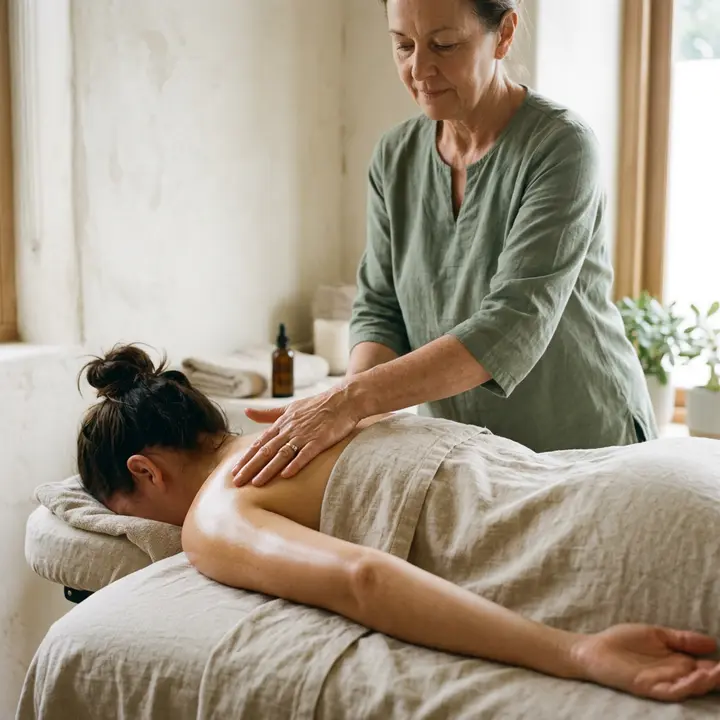
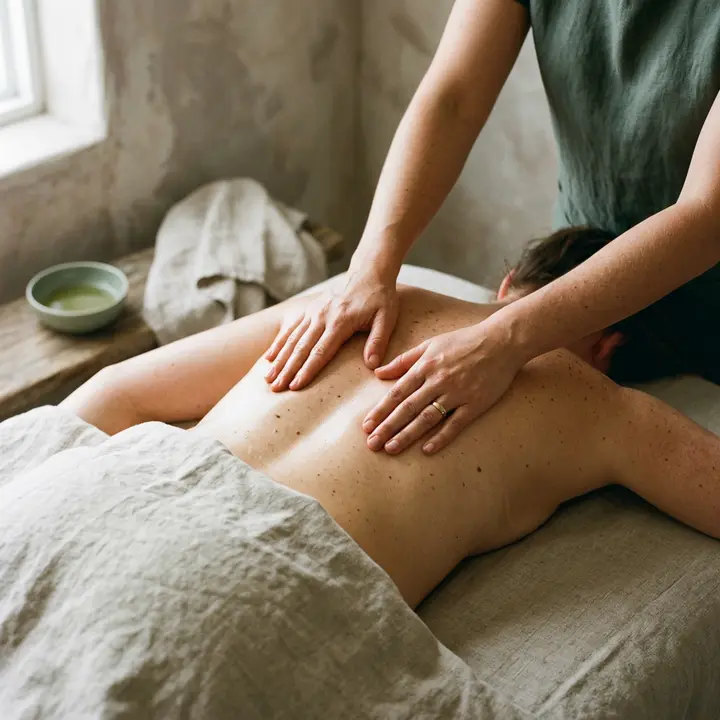
Gliding strokes and slow, held pressure: the two techniques this guide compares, as they look on the table.
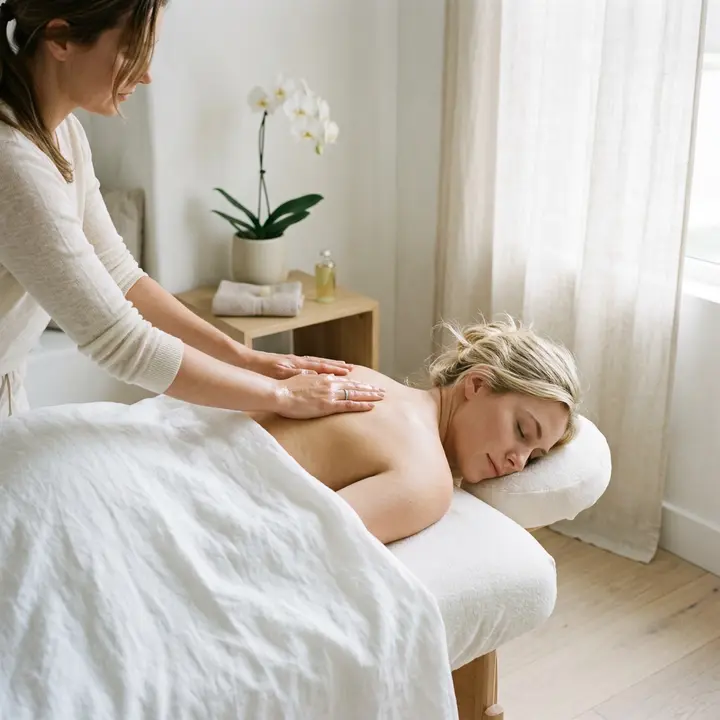
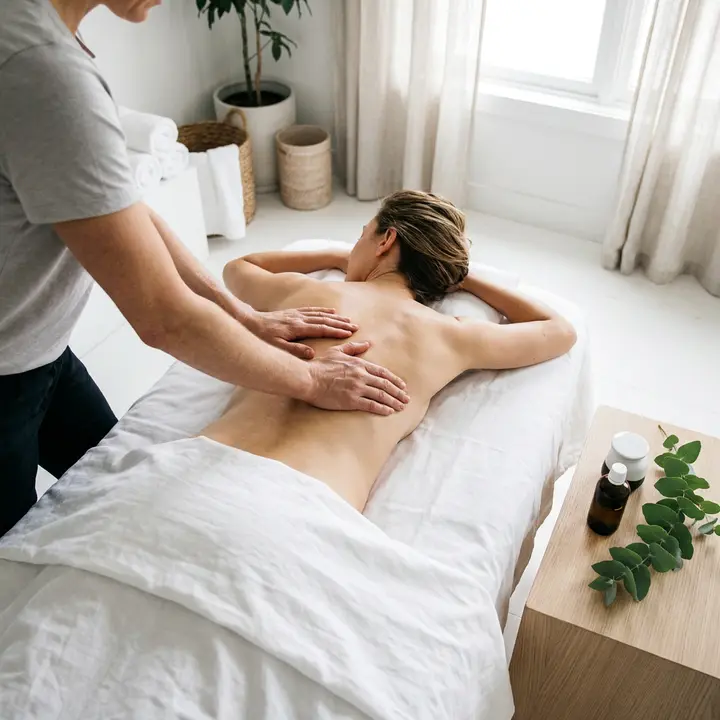

Treatment photography is illustrative of the services described.
Frequently Asked Questions
Is deep tissue massage better than Swedish massage?
Neither is better; they do different jobs, which is why the deep tissue vs Swedish massage question has no single winner. Swedish is the choice when relaxation, stress or a first massage is the point, and it covers the whole body in an hour. Deep tissue is the choice when a specific area has been tight for weeks and needs slow, firm work. Most regulars use both.
Can I just ask for firmer pressure in a Therapeutic Massage instead of booking deep tissue?
Yes, and for many people that is the right call. A Therapeutic Massage at firm pressure is still a full-body gliding session, so you get depth without the slow, held work on single spots. Book Deep Tissue when you want the therapist to stop and stay on a problem area; book Therapeutic with firmer pressure for the whole body worked harder.
Should I book 30 or 90 minutes of deep tissue?
Thirty minutes is enough for one area: upper back and neck, or lower back and hips. It is the right first deep tissue booking and fits a lunch hour. Ninety minutes is for the whole body at deep tissue pace, which cannot be squeezed into an hour. There is no 60-minute deep tissue line on either menu; Glenside's 60-minute firm option is Asian Power Massage.
What should I do before a deep tissue massage?
Drink water through the day, eat light rather than a big meal, and skip a hard workout beforehand so the muscle is not already tired. Tell the therapist about any injury, recent surgery or medication that affects bruising, and say where the tightness is and how firm you like it. A calm arrival matters; a braced body resists deep work.
Is the 120-minute Deep Relaxation Massage a deep tissue session?
No, despite the name. Deep Relaxation Massage is the long version of the Swedish-style session: two hours of unhurried gliding work with time for every part of the body. The word deep refers to the relaxation, not the pressure, so on the deep tissue vs Swedish massage scale it sits firmly on the Swedish side. For depth, the 90-minute Deep Tissue Massage is the long firm booking.
Can deep tissue massage cause bruising?
Occasionally, and usually it is minor. Firm sustained pressure can leave a small bruise, and people who bruise easily or take blood-thinning medication are more likely to see one, which is why the intake asks. Tell the therapist beforehand so pressure can be set accordingly. A bruise that spreads, or soreness still worsening after two days, is a reason to call us and then your doctor.
Does deep tissue massage release toxins?
There is no good evidence that it does, and we do not claim it. The soreness and thirst people notice after a deep session are ordinary responses to muscle being worked hard, not toxins leaving the body. Drinking water afterwards is still sensible, because it helps the soreness and most people arrive a little dehydrated, but it is not flushing anything out.
Is hot stone massage Swedish or deep tissue?
Closer to Swedish. The 60-minute Hot Stone Massage on the Glenside menu uses warm basalt stones with gliding strokes, and the heat lets the muscle soften so medium pressure feels deeper than it is. It suits someone who wants more than a standard Swedish-style hour but not the slow, held pressure of deep tissue.
Sources and further reading
What we read before writing this guide
- NCCIH: Massage Therapy — What You Need To Know
- NCCIH: Massage Therapy for Health — What the Science Says
- NCCIH: Chronic Pain and Complementary Health Approaches
- Mayo Clinic: Massage — Get in touch with its many benefits
Tao Spa is a relaxation and wellness spa, not a medical provider. Our sessions support relaxation and general well-being; they do not diagnose, treat or cure any condition. Talk with your doctor about persistent pain, swelling or skin changes, and tell us about any health condition before your session.
Ready to Relax at Tao Spa Glenside?
Book your visit to Tao Spa Glenside at 106 N Keswick Ave, Glenside, PA. Choose a service online, or call or text for help with your appointment.
Tao Spa
Glenside: 106 N Keswick Ave, Glenside, PA 19038
Spring House: 752 N Bethlehem Pike, Spring House, PA 19477
(215) 824-8585 Text UsMore massage guides
Plan your visit
How do I book a massage at Tao Spa?
Book a massage at Tao Spa in 4 steps: pick Glenside or Spring House, choose a 30, 60, 90 or 120-minute session, reserve online or call (215) 824-8585, then arrive 10 minutes early. Walk-ins are welcome at both Pennsylvania locations whenever a therapist is free, and gift cards are valid at either address.
- Choose your location. Glenside is at 106 N Keswick Ave, Glenside, PA 19038, open Mon–Sun 9:00 AM – 9:00 PM. Spring House is at 752 N Bethlehem Pike, Spring House, PA 19477, open Mon–Sun 10:00 AM – 9:00 PM (Closed Tuesday).
- Pick a treatment and a session length. Massage, reflexology and facials run 30, 60, 90 or 120 minutes; couples rooms are booked in 60, 75 or 90-minute blocks. Not sure what you need? Our full service menu lists every treatment with its length.
- Reserve online, call or text (215) 824-8585. Weekend evenings and couples rooms fill first, so book 2 to 3 days ahead for those slots. Walk-ins are taken any time a therapist is open.
- Arrive 10 minutes early. A first visit starts with a short intake about pressure preference, problem areas and any health notes. Gift cards never expire and work at both locations.