Bodywork Guide · Suction, Not Pressure
What Is Cupping Therapy, and Does It Hurt?
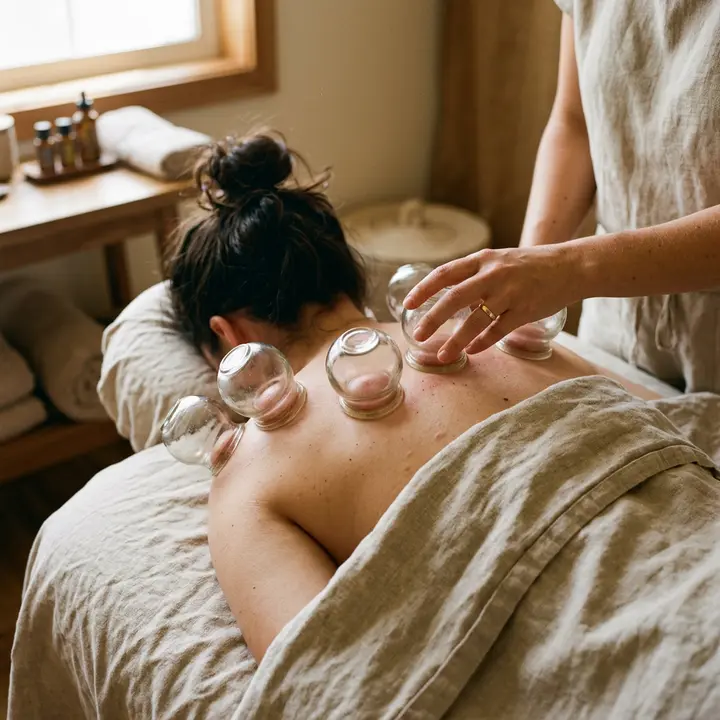
Most people who search what is cupping therapy have just seen the circles: a row of round marks across someone's shoulders. The circles are the after-effect; the practice itself is simple: a cup goes on the skin, the air inside is drawn out, and the skin and muscle underneath are pulled up into the cup instead of pressed down. At Tao Spa it's a 15-minute dry cupping add-on on both menus, and this guide covers how the suction works, how it feels, how long the cups stay on and how often to book.
In one paragraph
Cupping therapy is bodywork done by suction: a cup is set on the skin, air is drawn out of it, and the tissue underneath lifts into the cup. If the question is what is cupping therapy at Tao Spa, it's a 15-minute dry cupping add-on, usually 4 to 8 cups on the upper back for 5 to 10 minutes each, on both the Glenside and Spring House menus.
15-minute add-on · dry cupping only · 5–10 minutes per placement · both locations
By the numbers
What Is Cupping Therapy at a glance
| Detail | Number | Note |
|---|---|---|
| Session length | 15 minutes | Cupping, Specialty Massage section of both menus; add-on or on its own |
| Where it is offered | Both locations | 106 N Keswick Ave, Glenside and 752 N Bethlehem Pike, Spring House |
| Style | Dry cupping only | Pump-drawn suction; no flame, and the skin is never cut or pierced |
| Time per placement | 5–10 minutes | For a stationary cup; gliding cups keep moving and leave no rings |
| Glenside hours | Mon–Sun 9:00 AM – 9:00 PM | Spring House runs 10 AM to 9 PM and is closed on Tuesdays |
| Google rating | 4.7 stars | 277 reviews on the Glenside profile |
I · The definition
What is cupping therapy?
Cupping therapy is a traditional bodywork practice in which cups are placed on the skin and the air inside them is removed, creating suction that pulls the skin and the muscle beneath it upward. It's the reverse of a massage stroke: hands push tissue toward the bone, a cup draws it away. Today it's used mostly for relaxation and muscle tension.
The practice has old roots. The NCCIH's overview of traditional Chinese medicine describes the tradition cupping grew up in, the same one that produced acupuncture and tai chi, and the NCCIH's cupping page notes that the cups can be glass, ceramic, bamboo or plastic. The material matters little; the seal is everything.
At Tao Spa the answer to what is cupping therapy is narrower. It's a 15-minute line in the Specialty Massage section of both menus, dry cupping only, which means the suction comes from a pump and the skin is never pierced. Most guests attach it to a 60-minute massage; the Glenside cupping page and the Spring House cupping page cover how each storefront books it.
II · The mechanism
How does cupping work?
Cupping works by negative pressure. Once a cup is sealed against the skin and the air inside is drawn out, the pressure inside the cup drops below the pressure outside it, and the skin, the thin layer of fat beneath it and the top of the muscle are pulled up into the cup. That lift is the entire effect: tissue that spends the day compressed is briefly decompressed.
Two things decide how strong that feels: how much air comes out, which the therapist controls with the pump, and whether the cup stays put or moves. Stationary cups sit in one place for several minutes and leave the familiar circles; gliding cups go on over oiled skin at lighter suction and are slid along the muscle. The Cleveland Clinic's cupping overview describes the suction as drawing blood toward the area under the cup, which is also why the skin colors there; our guide to cupping marks explains that color and how long it lasts.
| Style | What the cup does | Suction level | What it feels like | Marks |
|---|---|---|---|---|
| Stationary cupping | Sits in one spot for 5 to 10 minutes | Light to medium, set per cup | A steady pull that settles into warmth | Round marks where each cup sat |
| Gliding (moving) cupping | Slides along oiled muscle for a few minutes at a time | Lighter, so the cup can travel | A slow, deep stroke pulling upward | A general flush, usually no rings |
| Combination | A few gliding passes, then cups parked on the tightest spots | Varies by placement | Both of the above inside one 15-minute add-on | Fewer, lighter circles |
Our therapists use both styles. Say which you'd prefer, or which marks you'd rather avoid, before the first cup goes on.
III · The feel
Does cupping hurt?
No, cupping shouldn't hurt. What you feel is a pulling sensation, the opposite of massage pressure: a firm, steady tug on the skin that most guests describe as strange for the first half minute and then relaxing. The suction is set low on the first cup as a test and raised only if you ask, and a cup that feels too strong comes off in a second.
The marks are what make people assume otherwise: the color is suction drawing blood toward the surface, not an injury, and most guests report mild tenderness at most the next day. The NCCIH cupping fact sheet lists skin discoloration and mild discomfort as the common side effects, with burns and infection as rare ones tied to flames and reused equipment, neither of which applies to pump suction and a sanitized set per guest. What the circles are and how many days they take to fade is covered in the cupping marks guide.
Does cupping hurt more than deep tissue massage?
Usually less. Deep tissue work concentrates force through a thumb or an elbow into one spot; a cup spreads its pull around the whole rim and never pushes toward bone. Guests who find firm pressure hard to tolerate often find cupping easier, which is why it pairs as comfortably with the 60-minute Therapeutic Massage as with the 90-minute Deep Tissue Massage.
IV · Expectations
What are the cupping therapy benefits you can reasonably expect?
The benefits people reliably describe after cupping are the modest ones: a feeling of release across a tight upper back, looser shoulders for a day or two, and the relaxation of lying still while something gentle happens. Anything bigger than that is unproven. We offer cupping as a relaxation service, and that's the level the published research supports.
It's worth being specific about the evidence, because the internet isn't. The NCCIH's cupping page names no condition the practice is proven to help and spends most of its length on safety; the studies it summarizes are few and small. The Cleveland Clinic is a little more permissive, listing muscle tension, pain and relaxation among the reasons people try it, while noting that more research is needed.
What is cupping therapy good for, then?
Three things, none of them medical. A back that feels tight everywhere rather than knotted in one place, since suction covers a broad area. The end of a massage, when the muscle is warm and the therapist knows which two spots stayed stubborn. And guests who dislike firm hand pressure but still want to feel something happen. A back that hurts rather than feels tight is a doctor's call first.
The short answer to what is cupping therapy: the one thing on our menu that pulls instead of pushes.
V · Timing
How long do you leave cupping on?
A stationary cup stays on for about 5 to 10 minutes. Inside our 15-minute add-on that means one round of placements, usually 4 to 8 cups across the upper back and shoulder line, set in the first couple of minutes and lifted before the last. Gliding cups don't sit at all; they move along the muscle for a few minutes and come off without leaving rings.
Longer isn't better. Cup time and suction strength are the two things that decide how dark the marks come out, so a therapist who wants light marks shortens the time rather than loosening the seal. New to cupping? Expect the shorter end of the range on a first visit. The fade window for each cup time is tabulated in the cupping marks guide.
How long does a cupping session take in total?
The add-on is 15 minutes on top of whatever massage it follows, so a 60-minute Therapeutic Massage with cupping is a 75-minute appointment and a 90-minute Deep Tissue Massage with cupping is 105. Booked alone it's a 15-minute visit plus a short intake, so it fits same-day gaps: Glenside is open 9 AM to 9 PM daily, Spring House 10 AM to 9 PM except Tuesday.
VI · Spacing
How often should you do cupping?
Let the marks fade completely before the next session, then book by how your back feels rather than by a schedule. For most guests that works out to cupping every 2 to 4 weeks, added to their regular massage. Two sessions a few days apart put fresh circles on skin that hasn't cleared the last set, and we'd rather you didn't.
The practical rhythm: a first session with light suction and short cup time, so you learn how your skin responds; a gap of at least a week, longer if the circles took their time; then, if you liked it, a standing add-on on your regular massage, with the placement varied visit to visit. Guests in a stressful stretch sometimes close the gap to 2 weeks; most settle nearer 4.
Nothing on our side pushes you toward more visits: Tao Spa has no memberships, and the cupping line is bought one session at a time.
VII · The three kinds
Dry, wet or fire cupping: which kind does Tao Spa do?
Dry cupping only, at both locations. Dry means the suction comes from a pump drawing air out of a glass or silicone cup; the skin is never cut or pierced, and nothing leaves the body. Wet cupping nicks the skin so that blood flows into the cup, and fire cupping uses a flame to heat the air before the cup is placed. We offer neither.
The distinction matters more for safety than for feel. The NCCIH singles out two risks: burns, which come from flame, and bloodborne infection from equipment reused without sterilization. Pump suction removes the first and a sanitized cup set per guest removes the second; you're welcome to ask to see the set before it goes on.
| Style | How the suction is made | Does the skin break? | Where you'd find it | At Tao Spa |
|---|---|---|---|---|
| Dry cupping | A pump draws air out of the cup | No | Spas, massage studios, some clinics | Yes: 15-minute add-on at both locations |
| Fire cupping | A flame heats the air inside the cup; it grips as the air cools | No | Traditional practitioners, some clinics | No; no flame is used in our rooms |
| Wet cupping | Suction first, then small cuts so blood flows into the cup | Yes | Medical or traditional-medicine settings | No; outside a spa's scope |
Our cups are a sanitized set per guest, are never placed over broken skin, and the suction is adjusted cup by cup.
Can you do cupping on your feet?
Foot cupping isn't something we offer at either location. A sole is small, curved and thick-skinned, a poor fit for a cup that needs a flat seal, and feet are better served by hands. The foot bookings are Reflexology, 30 or 60 minutes, and the 15-minute Spa Pedi add-on; the Glenside reflexology page and the Spring House reflexology page describe both.
The 60-minute Reflexology at Glenside includes an herbal foot bath; the Spa Pedi includes no polish or color.
VIII · The 15 minutes
What does a 15-minute cupping session look like at Tao Spa?
A cupping session at Tao Spa runs the same way whether it's added to a massage or booked on its own; the only difference is whether your back is already warm. Arrive 10 minutes early on a first visit for the intake, 5 if you've been before.
From the intake question to the last cup coming off, the add-on goes like this:
- Intake. The therapist asks about blood thinners, skin conditions, recent sun and pregnancy, anything to avoid, and whether you'd rather have light marks or none.
- Warm-up. After a massage the back is already worked and oiled; on a stand-alone visit a warm cloth pass and a little oil come first so the cups can seal or glide.
- Test cup. One cup goes on at low suction so you feel the pull first. Say more or less; it's adjusted on the spot.
- Placement. The rest go on, usually 4 to 8 across the upper back and shoulders, parked on the spots that stayed tight; gliding passes, if any, come first.
- The wait. Stationary cups stay 5 to 10 minutes. The pull settles into warmth after the first minute; this is the part where you do nothing.
- Release. Each cup is lifted at the rim so the seal breaks gently, there's a short hands-on finish, and your cup set is sanitized before anyone else's session.
Who should ask a doctor before cupping?
Anyone on blood thinners or with a bleeding disorder, since suction draws blood toward the surface; anyone pregnant; anyone with sunburn or broken skin where the cups would sit, or with eczema or psoriasis, which the NCCIH notes cupping can worsen; and anyone who bruises easily or has had recent surgery. None is an automatic no, but each is a conversation for your doctor first, then the therapist at intake.
During pregnancy the 60-minute Prenatal Massage is the booking instead.
Session lengths at Tao Spa Glenside
Cupping and the sessions it attaches to at Tao Spa Glenside
| Service | Length | Menu section |
|---|---|---|
| Migraine Massage + Free Guasha | 60min | Massage Pro |
| Deep Tissue Massage | 30min | Massage Bodywork |
| Therapeutic Massage | 60min | Massage Bodywork |
| Reflexology | 30min | Reflexology & Foot |
| Cupping | 15min | Specialty Massage |
| Spa Pedi | 15min | Specialty Massage |
| Gua Sha | 15min | Specialty Massage |
The add-on reserves 15 extra minutes on top of the massage. Spring House carries the same Cupping and Gua Sha lines and is closed on Tuesdays.
Key facts
Where to book: Tao Spa Glenside at a glance
| Address | 106 N Keswick Ave, Glenside, PA 19038 |
|---|---|
| Phone | (215) 824-8585 |
| Hours | Mon–Sun 9:00 AM – 9:00 PM |
| Google rating | 4.7 stars from 277 reviews |
| Session lengths | 15 · 25 · 30 · 50 · 60 · 75 · 90 · 100 · 120 · 360 minutes |
| Menu size | 45 bookable services across 8 categories |
| Other location | Tao Spa Spring House — 752 N Bethlehem Pike, Spring House, PA 19477 |
| Other location hours | Mon–Sun 10:00 AM – 9:00 PM (Closed Tuesday) |
Cups, suction and the room
The parts of a cupping session guests ask about before they book: the cups, how the suction is set, and the massage most people attach it to.
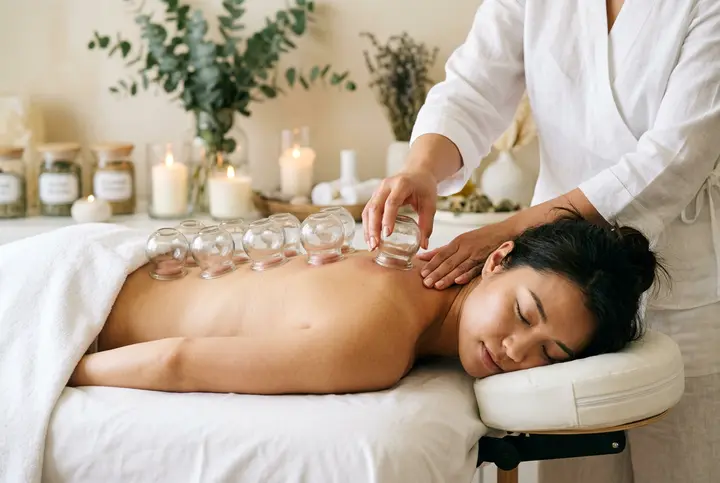
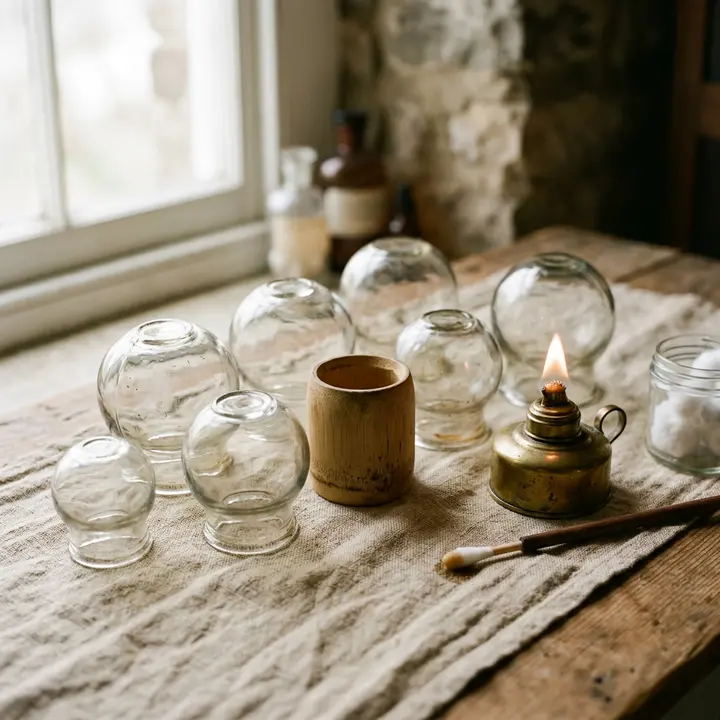
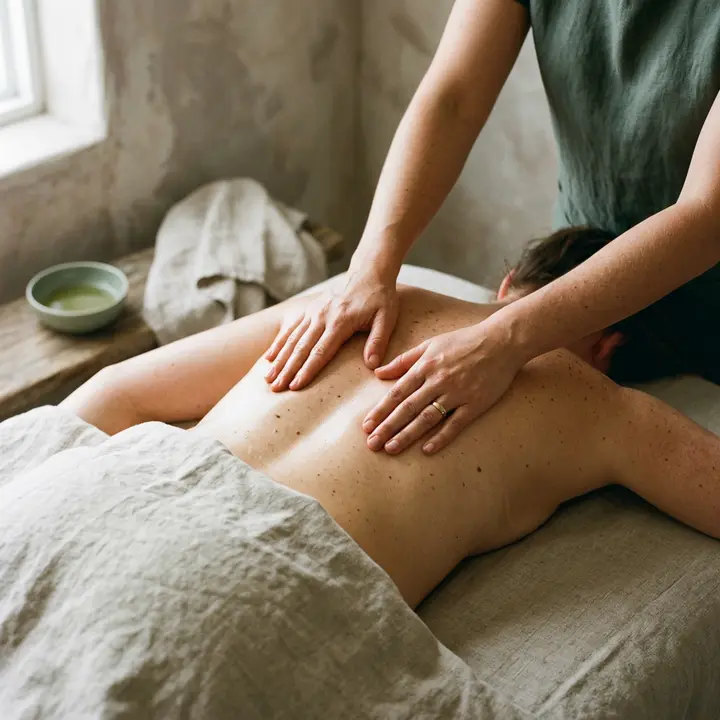
Treatment photography is illustrative of the services described.
Frequently Asked Questions
Is cupping therapy safe?
For most healthy adults, yes: the NCCIH calls cupping generally safe with a trained provider. The side effects it lists are temporary discoloration, mild discomfort and, rarely, burns or infection. We use pump suction, no flame, and a sanitized cup set per guest, and we never cup over broken skin.
Can you get cupping without a massage?
Yes. Cupping is its own 15-minute line in the Specialty Massage section of both menus, so it can be booked alone. The difference is the warm-up: after a massage the back is already soft and oiled; a stand-alone visit starts with a warm cloth pass and a minute or two of hand work.
Can I add cupping to any massage on the menu?
To any of the table massages, yes: the 30, 60, 90 and 120-minute sessions at either location. It attaches at the end, once the back is warm, and adds 15 minutes to the appointment rather than replacing part of the massage, so mention it when you book and the extra time is held.
Where on the body is cupping done?
Mostly across the upper back and the shoulder line, where a cup seals best: a flat, fleshy surface without bone directly beneath. The therapist can move lower down the back if that's where the tightness sits. Facial cupping isn't on either menu, foot cupping isn't something we offer, and no cup goes over broken skin.
What should you do after a cupping session?
Not much. Drink some water, keep the cupped area covered and warm for the rest of the day, and leave the hard workout and the back scrub until tomorrow. Don't rub or press the circles; they need no care at all and fade on their own, and our guide to cupping marks gives the day-by-day timing.
Does cupping work for back pain?
The research doesn't say. Cupping has been studied for pain, including back pain, but the NCCIH describes the studies as few and weak and names no condition it's proven to help. What guests reliably report is that a tight back feels looser for a while afterwards, a relaxation benefit, which is all we claim. Persistent back pain belongs with your doctor first.
Can you shower after cupping?
Yes, and many guests rinse the oil off before bed. Keep the water warm rather than hot, skip the loofah over the circles, and pat the area dry instead of scrubbing. Water doesn't affect the marks either way: they don't wash off and don't need treating.
Is cupping the same as gua sha?
No, though both are 15-minute add-ons on our menus and both leave temporary marks. Cupping pulls tissue upward with suction and leaves round marks where each cup sat; gua sha presses and strokes the muscle with a smooth-edged stone and leaves streaky red speckling along the stroke. Our body gua sha guide compares the two in detail.
Sources and further reading
What we read before writing this guide
- NCCIH: Cupping
- Cleveland Clinic: Cupping
- NCCIH: Traditional Chinese Medicine — What You Need To Know
Tao Spa is a relaxation and wellness spa, not a medical provider. Our sessions support relaxation and general well-being; they do not diagnose, treat or cure any condition. Talk with your doctor about persistent pain, swelling or skin changes, and tell us about any health condition before your session.
Ready to Relax at Tao Spa Glenside?
Book your visit to Tao Spa Glenside at 106 N Keswick Ave, Glenside, PA. Choose a service online, or call or text for help with your appointment.
Tao Spa
Glenside: 106 N Keswick Ave, Glenside, PA 19038
Spring House: 752 N Bethlehem Pike, Spring House, PA 19477
(215) 824-8585 Text UsMore massage guides
Plan your visit
How do I book a massage at Tao Spa?
Book a massage at Tao Spa in 4 steps: pick Glenside or Spring House, choose a 30, 60, 90 or 120-minute session, reserve online or call (215) 824-8585, then arrive 10 minutes early. Walk-ins are welcome at both Pennsylvania locations whenever a therapist is free, and gift cards are valid at either address.
- Choose your location. Glenside is at 106 N Keswick Ave, Glenside, PA 19038, open Mon–Sun 9:00 AM – 9:00 PM. Spring House is at 752 N Bethlehem Pike, Spring House, PA 19477, open Mon–Sun 10:00 AM – 9:00 PM (Closed Tuesday).
- Pick a treatment and a session length. Massage, reflexology and facials run 30, 60, 90 or 120 minutes; couples rooms are booked in 60, 75 or 90-minute blocks. Not sure what you need? Our full service menu lists every treatment with its length.
- Reserve online, call or text (215) 824-8585. Weekend evenings and couples rooms fill first, so book 2 to 3 days ahead for those slots. Walk-ins are taken any time a therapist is open.
- Arrive 10 minutes early. A first visit starts with a short intake about pressure preference, problem areas and any health notes. Gift cards never expire and work at both locations.